Blackberry Control

Riparia has extensive knowledge creating and executing blackberry removal and integrated noxious weed management plans, with the scientific background to properly identify infestations, recognize sensitive areas such as streams and wetlands, and prescribe a management plan that combines mechanical, manual, chemical, and cultural control practices.

Request a Blackberry Control Assessment

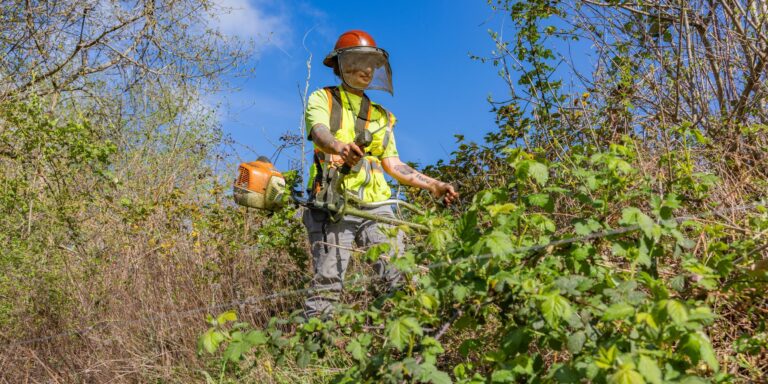
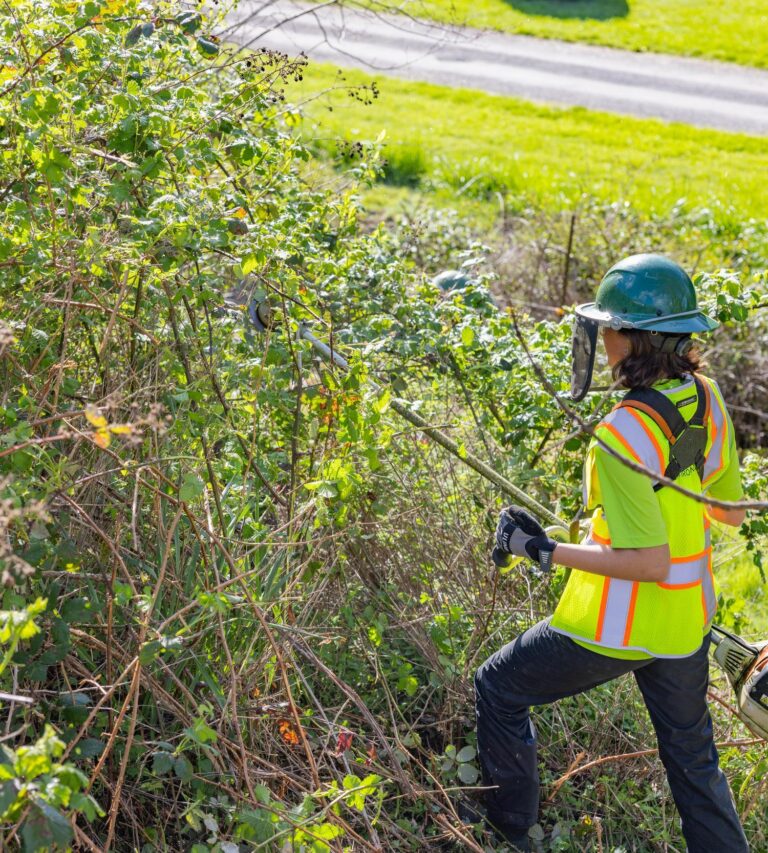
Worker in a high-visibility vest and face shield using a brush cutter to clear overgrown brambles and shrubs on a sunny day

Effective Management Delivering Real Results

Himalayan blackberry (Rubus armeniacus) is one of the most aggressive and damaging invasive species in the Pacific Northwest, and without blackberry removal and active management, it will outcompete native vegetation, reduce habitat complexity, restrict site access, and degrade ecological systems. Riparia experienced staff hold all applicable WSDA licenses, and we have the equipment and operators to manage blackberry infestations of any size—from a single overgrown riparian corridor to a multi-acre project site clearance.

Shield-shaped emblem showing yellow invasive flowers by a winding path toward green hills; text below reads "INVASIVE SPECIES"

Who This Is For

  • Land surveyors and contractors who need blackberry removal services to restore site access and clearing of overgrowth to establish survey points, conduct site investigations, or begin construction—with the right equipment mobilized quickly and operated safely.

  • Private landowners with blackberry overgrowing riparian areas, fence lines, or open land who want to reclaim visibility, restore site usability, or create the conditions needed to reestablish native vegetation.

  • Local nonprofits, conservation districts, and restoration organizations beginning restoration work on a project site where invasive species and blackberry need to be removed before native planting can begin.

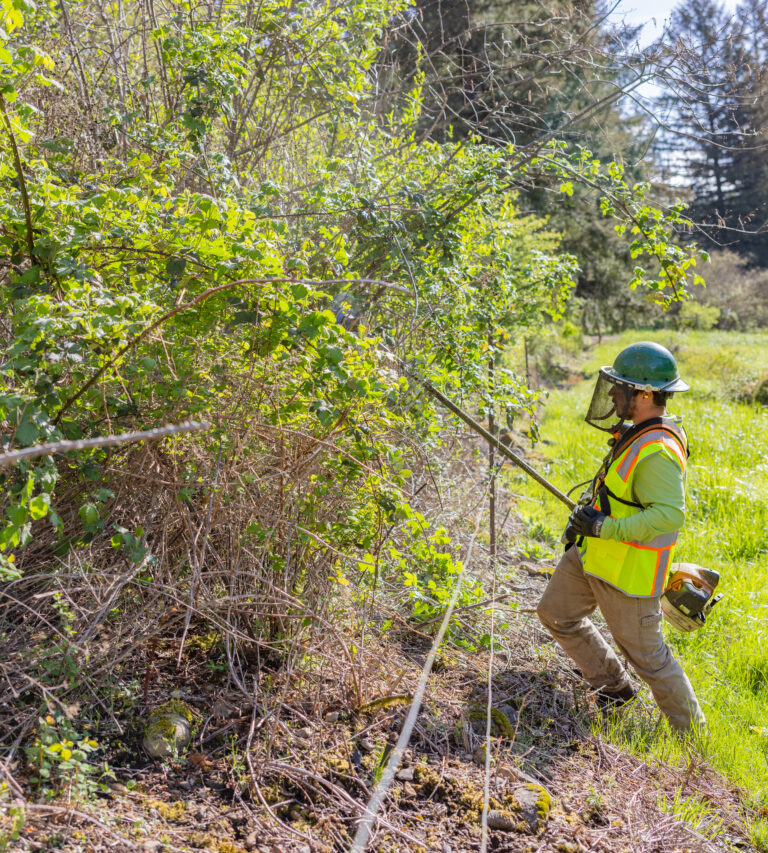
Worker in high-visibility gear and face shield trimming dense roadside brush with a pole trimmer on a sunny day.

What To Expect

Riparia makes Blackberry removal straightforward and reliable. Clients can expect prompt, professional service delivered by licensed, knowledgeable field staff.

  • Prompt Mobilization: Depending on the time of year, Riparia field crews can be on site and kicking off vegetation management services within a week of initial contact.
  • The Right Equipment for the Job: Riparia operates mowers and mechanical equipment sized and suited for any scale of blackberry infestation, making short work of vegetation problems that would be impractical to address by hand alone.
  • Properly Licensed Herbicide Application: Riparia field staff hold WSDA aquatic herbicide applicator licenses. We follow required procedures, apply treatments responsibly, and produce daily application reports for full regulatory documentation. Our chemical treatments are applied legally, responsibly, and with full documentation.
  • A Management Plan Built for Your Site: Every blackberry control engagement starts with a proper assessment of the infestation scope, sensitive areas, and site-specific needs. Our approach is calibrated to your situation rather than applied generically.
How We Work

  • 1. Scope Assessment

    Riparia conducts a full survey of the infestation using on-site data collection and applicable government mapping resources to identify the scope of the blackberry presence, any sensitive areas requiring special consideration, and the most effective management approach for the site and timeline.

  • 2. Boots on the Ground & Initial Treatment

    Riparia promptly mobilizes the appropriate equipment, operators, hand tools, and herbicide application equipment to the site to complete initial mechanical and chemical management. Getting the first treatment completed efficiently establishes the foundation for any applicable follow-up treatments.

  • 3. Scheduled Follow-Up Treatments

    Blackberry control often requires repeated targeting to be effective. When contracting with clients, Riparia establishes a clear treatment schedule with defined visit intervals—typically six to eight weeks apart—timed to allow new growth to emerge before the next treatment. A full year of rotating mechanical and chemical treatments is recommended for effective, lasting control.

  • Depending on the time of year, Riparia field crews can be on site to kick-off vegetation management within a week of initial contact. Smaller land parcels can be brought under reasonable control within a single season, including follow-up. Larger areas may take up to a full year of treatment, with regular maintenance scheduled at strategic intervals six to eight weeks apart.

Why Blackberry Control Matters

Himalayan blackberry is not just an inconvenience—it is an ecologically destructive invasive species that reshapes the plant communities it enters, degrading habitat, and creating real operational and regulatory problems for landowners and project teams. Managing it effectively with properly licensed staff and appropriate methods provides benefits that go well beyond aesthetics.

Worker in high-visibility vest and green hard hat clearing thick brambles with a brush cutter in a grassy roadside area

Habitat Loss & Reduced Species Complexity

Blackberry aggressively outcompetes native vegetation, crowding out the plant diversity that supports wildlife habitat, pollinator populations, and functional riparian ecosystems.

Site Access & Project Viability

Dense blackberry growth restricts the ability of surveyors, builders, restoration crews, and property owners to move freely across a site. Projects that require access to specific areas and key infrastructure may be effectively blocked until blackberry is cleared.

Worker in a green hard hat, safety visor and high-visibility vest cutting back overgrown brambles with a long pole trimmer in a sunny grassy field

Stream Health & Salmon Habitat

Blackberry invades riparian areas and kills the native trees and shrubs that provide stream shade. Loss of shade cover increases water temperatures which is a direct threat to salmon spawning habitat in Pacific Northwest streams and rivers.

Regulatory Risk from Improper Herbicide Application

Herbicide application in or near aquatic areas is tightly regulated and requires specific WSDA licensing. Unlicensed or improperly applied herbicide treatments near streams, wetlands, or other water bodies can cause serious ecological harm and expose the applicator to significant liability.

Signature Project

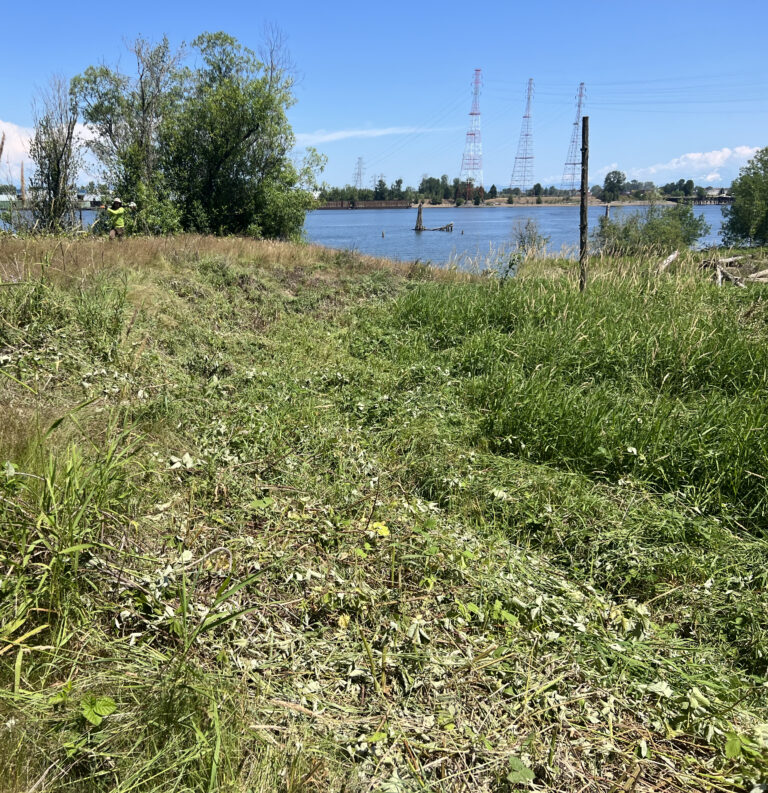
Riverside grassy bank with cut vegetation in foreground, a worker in a neon shirt by trees left, and tall transmission towers across the water under a blue sky

Portland General Electric, PGE Harborton — Portland, OR

Riparia Environmental provided mitigation maintenance services at the PGE Harborton Wetland Mitigation Site in Portland, Oregon, supporting ongoing habitat management and restoration efforts.

Our team implemented targeted vegetation management strategies across the site. Scotch broom was removed using hand pulling and weed wrench methods along the southeast and southwest terraces to minimize disturbance to surrounding vegetation. On the southwest terrace, Himalayan blackberry was mechanically mulched, with follow-up chemical treatments applied to control regrowth.

Additionally, reed canary grass was treated using selective herbicide applications across both terraces and along the creek corridor, including both banks from the inflow to the confluence. Multiple treatment applications were completed to improve effectiveness and support long-term vegetation control.

Specific Tasks Included: Invasive Species Control, Mechanical Removal, Herbicide Application, Habitat Restoration Support

Frequently Asked Questions

Related Services

  • Natural Resource Management

    Full-lifecycle natural resource services for Pacific Northwest landowners, agencies, and conservation organizations.

    Read more

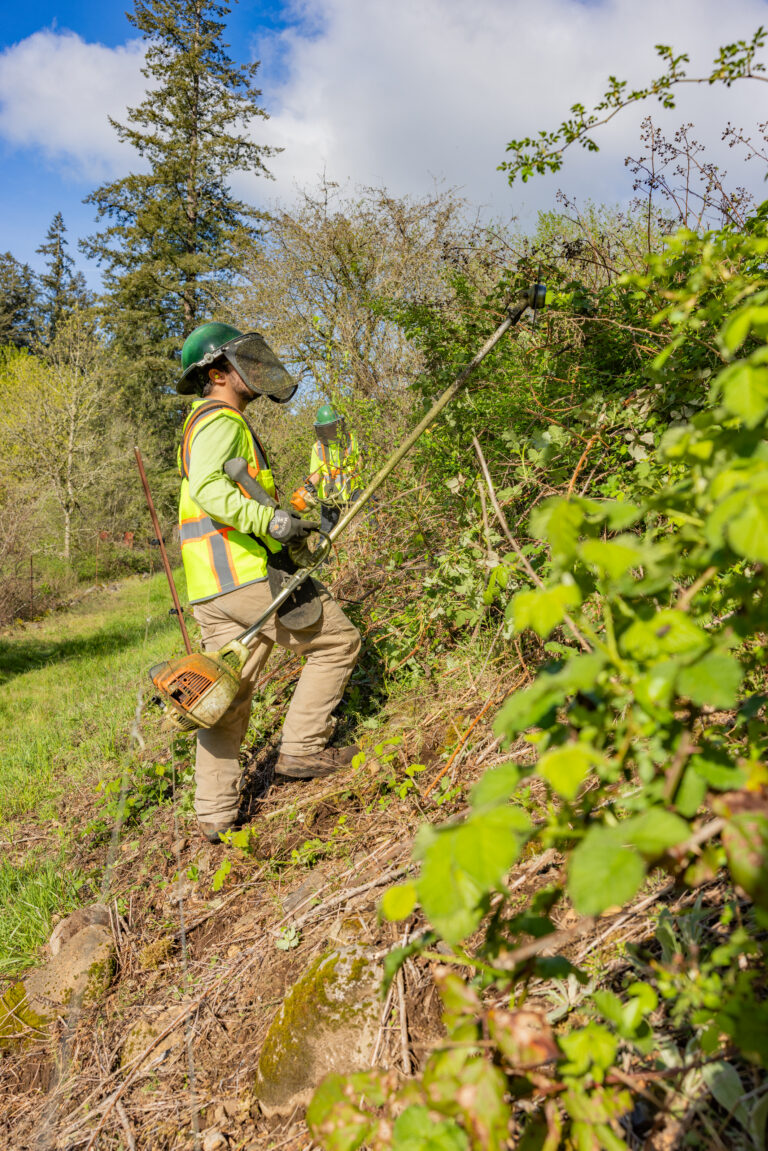
Three workers in high-visibility vests and hard hats clearing brush on a sunny hillside using trimmers and hand tools.

Ready To Get Started?

Blackberry doesn’t wait, and neither should your management plan. Contact Riparia today for a site assessment and let’s put together a treatment program to get it under control.

Request a Blackberry Control Assessment

Or call us directly: (360) 693-4555