Completed for a private HOA organization, the HARL facility overseen by our client was a stormwater treatment train that had detention and then a large flow through swales with an augmented underdrain. This facility received a poor inspection notice from the City inspector, and the organization went to solicit bids to correct the item.
Initially the client went with a different vendor and not Riparia. Unfortunately for the client the other contractor used questionable methods and employed poor standards during the work. This resulted in additional elements within the facility experiencing damage, including broken flow spreaders, broken concrete forebay, and poor system performance resulting in facility overtopping, and additional City notices for defects of the facility.
The Client then reached out to us for assistance to restore the facility. We reviewed the conditions and created a comprehensive approach to restoring the facility.
This started with a robust as-built plan set review, an internal review with a stormwater design engineer, additional diagnostic steps, and interacting with the City on proposed modifications to the facility to employ the up-to-date soil matrix and vegetation assemblages per the new stormwater manual. Given the previous poor outcome the client was understandably needing additional information and assurances the work would be successful, including a robust review of contractual language, onsite reviews of initial and diagnostic assessments with the Client and the City, and creating a project work plan to address all elements to bring the facility back to compliance and good operational conditions. Once the Client provided a green light to the project, the Riparia field team had a table session and site walk through with both the Project manager and Stormwater Analyst to review the work, and work plan and to make any changes provided the site constraints.
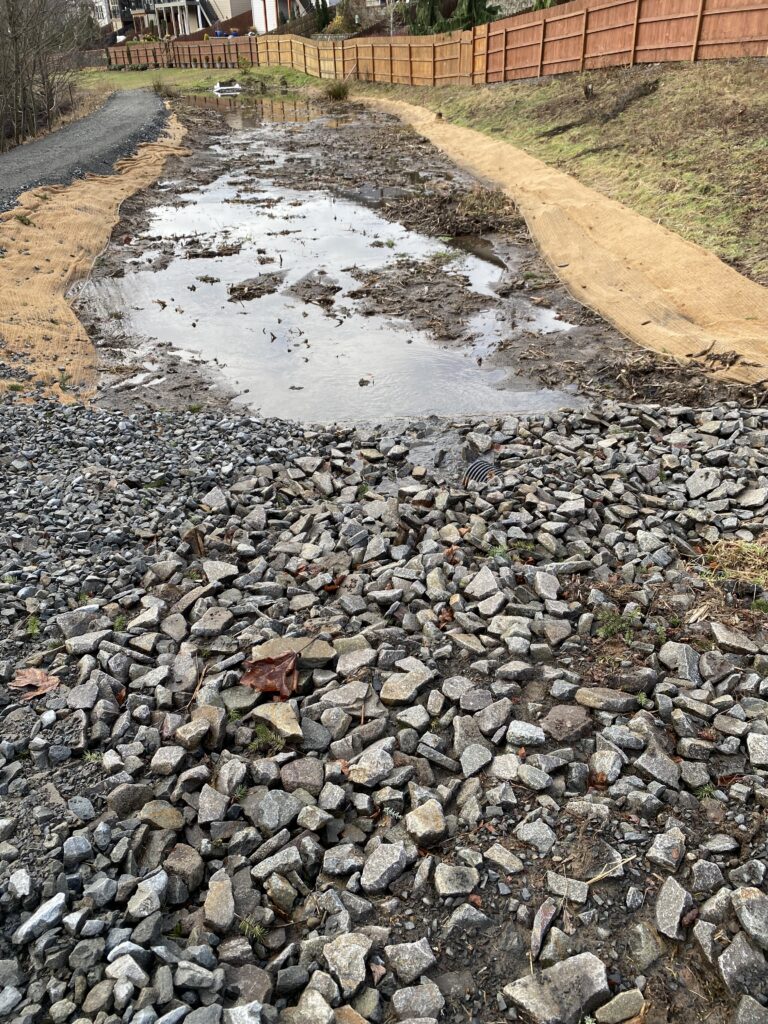
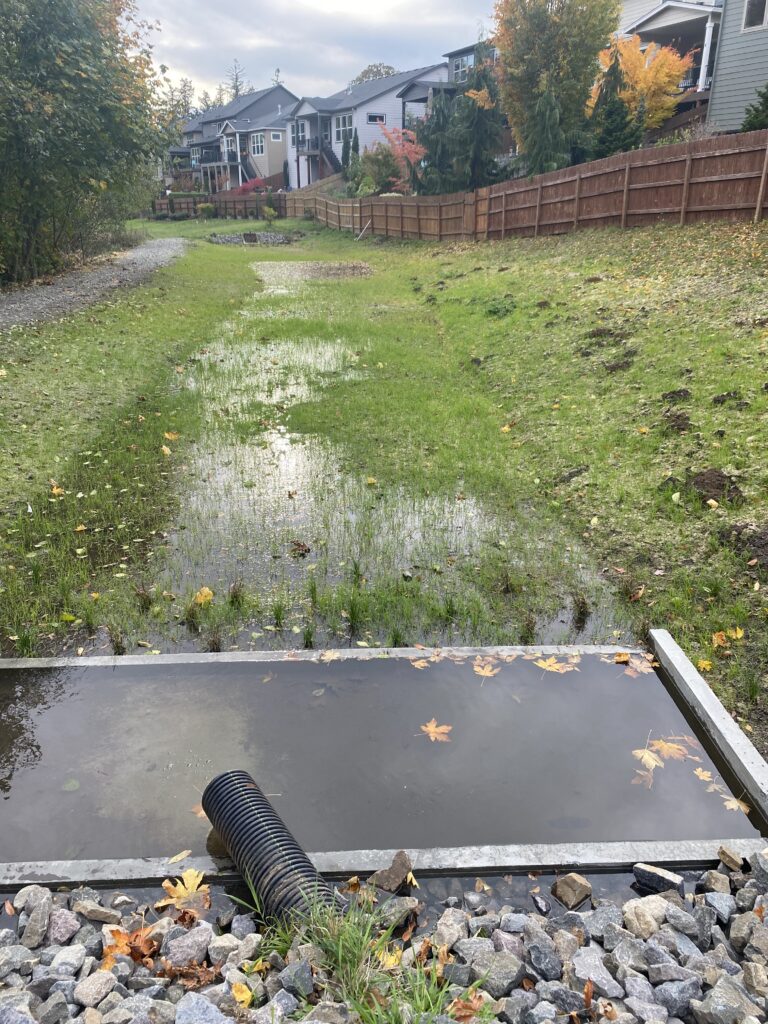
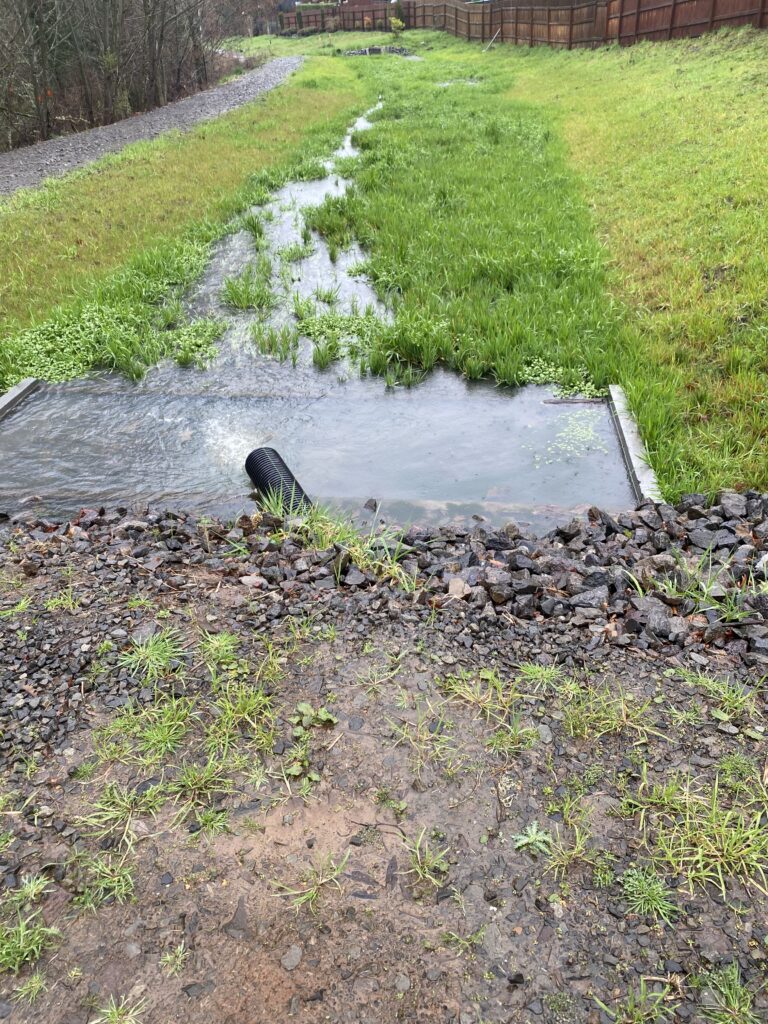
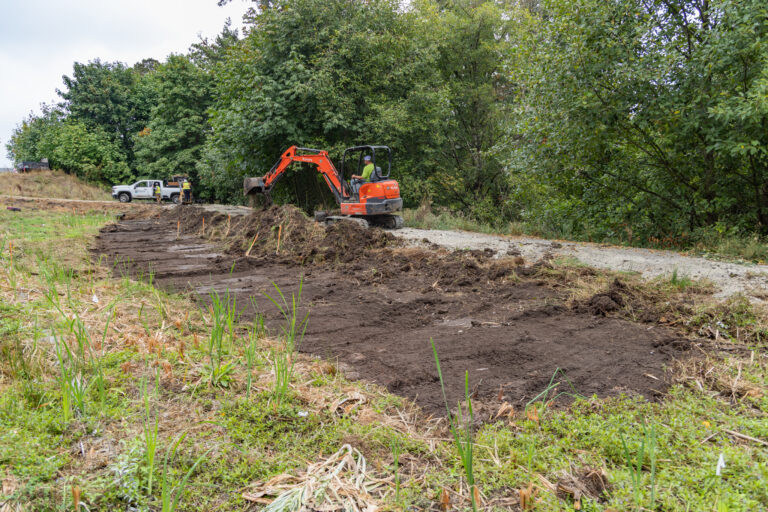
A key project element was to remove the soil from the swale treatment area to remove the broken the concrete items, and out of specification materials and rip rap used by the previous contractor, without compromising the underdrain. This careful excavation requires a highly capable operator working from the side slopes. The team removed 100 plus yards of soil material, and replaced with approximately 100 yards of new swale mix that was certified per soil analysis and grade the swale geometry back to design, including the side slopes and berm. The team then replaced the flow spreaders and installed a new sediment forebay precast box. The team cross checked the elevations against the established surveyed benchmarks to ensure new features were level. The facility was sprayed with a hydroseed mulch and irrigated to ensure growth and plant establishment. Once there was adequate coverage a flow test was completed to determine if there were any low spots within the facility.
As work progressed, the Client and City were provided with regular updates, and a final notice of completion was provided to the City who then completed a facility inspection, finding the facility to meet standards.
This project highlights the Riparia approach. We use a solid methodology to pay attention to the details during a restoration project; we make sure there is a clear understanding of the knowable and foreseeable issues that might arise and communicate those issues to the Client. We seek to ensure that the job is done and done correctly the first time