What To Expect
Riparia makes Japanese knotweed removal straightforward and reliable. Clients can expect prompt, professional service delivered by licensed, knowledgeable field staff.
Japanese knotweed is one of the most aggressive and resilient invasive plants in the Pacific Northwest. It spreads rapidly from tiny fragments, thrives in harsh environments, and forms dense monocultures that crowd out native vegetation along streams, rocky soils, and disturbed sites.
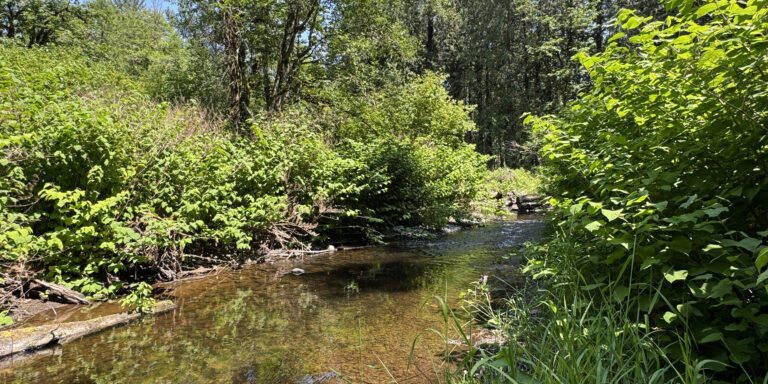
Riparia’s removal strategies combine mechanical and chemical methods tailored to the specific site and client preferences, ensuring safe, effective, and lasting control. Our team are plant and ecosystem specialists who accurately identify knotweed, understand its growth patterns, and determine the right removal method for each situation.
Homeowners with streams or sensitive landscapes impacted by knotweed who need professional removal that is safe for surrounding soil, vegetation, and waterways.
Land stewards and community managers responsible for parks, trails, and public spaces where knotweed has established and is threatening native plant communities and public land.
Property managers and developers managing properties where knotweed threatens infrastructure, natural areas, or adjacent sensitive habitats and requires professional, documented treatment.
Riparia makes Japanese knotweed removal straightforward and reliable. Clients can expect prompt, professional service delivered by licensed, knowledgeable field staff.
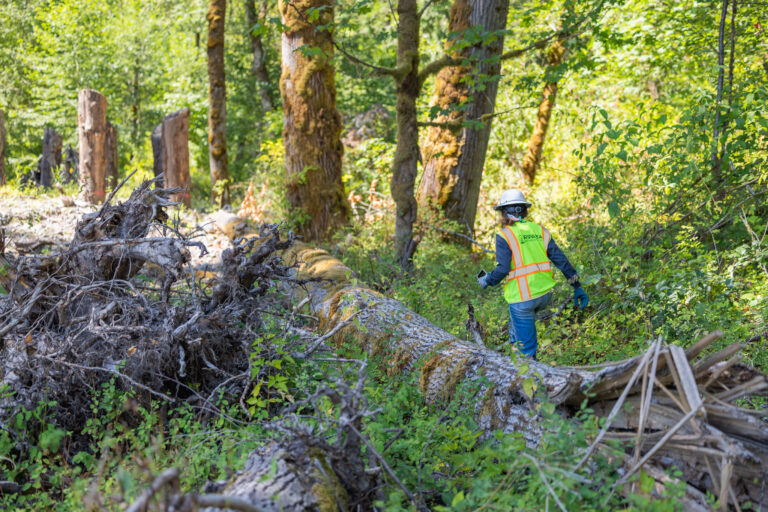
Chemical control using stem injection is Riparia’s preferred method for knotweed near waterways. Injectable herbicide is applied directly into mature stems, preventing runoff and ensuring the chemical metabolizes throughout the plant’s root system for maximum effectiveness with minimal risk to surrounding native species and water quality.
Our trained field staff assess the infestation—documenting its extent, proximity to sensitive areas, and site-specific conditions—and recommend a treatment prescription based on best management practices and client preferences.
Field staff apply the prescribed treatment, typically stem injection into mature knotweed stems of appropriate size. Injectable herbicide begins to take effect within one to two weeks, with visible dieback appearing in the root system as the chemical metabolizes through the plant.
Riparia returns several weeks after initial treatment to verify effectiveness. Any stems or root zones not showing clear signs of dieback are re-treated.
Knotweed management is rarely a one-season effort. A full year of treatment, and often multiple seasons, is recommended to deplete root energy reserves and prevent reestablishment. Riparia will provide realistic expectations for your specific site at the time of assessment.
Japanese knotweed is one of the most ecologically damaging and practically difficult plants to manage in our region. When knotweed has become established, professional removal is the clearest path to meaningful, lasting control.
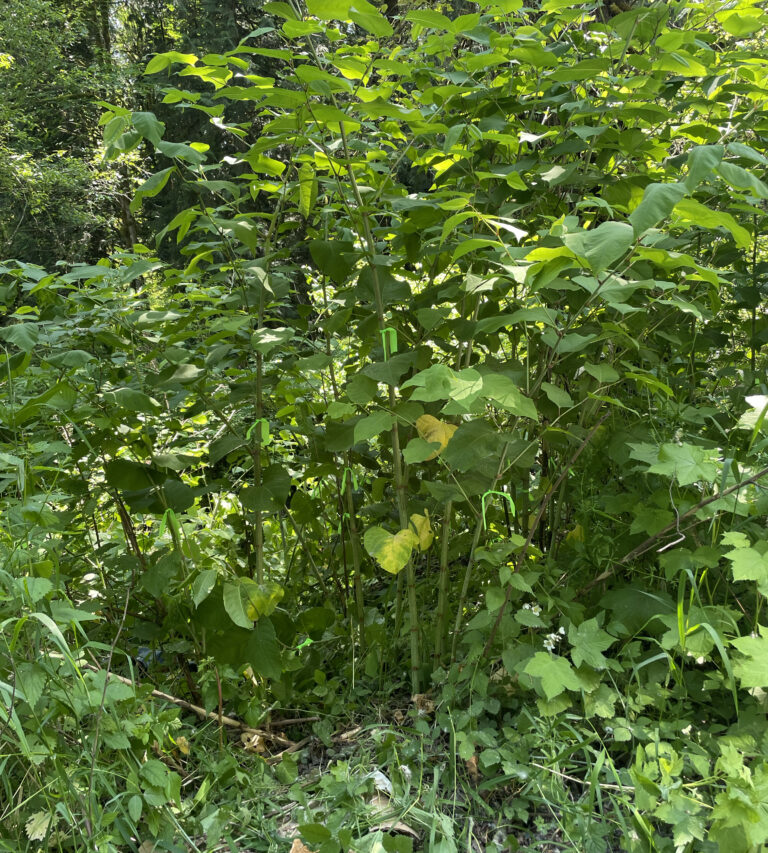
Knotweed is capable of rapidly dominating landscapes and forming dense monocultures that eliminate the native plant diversity that wildlife, pollinators, and aquatic ecosystems depend on. Its wide leaves shade the ground during the critical spring and summer growing season, preventing native plants from establishing and creating biodiversity loss.
Knotweed thrives along streams and creek banks—but its shallow root system is poor at holding soil. Streamside populations contribute directly to erosion, with soil and plant fragments washing downstream where they can establish new infestations on neighboring properties and in sensitive habitats.
Knotweed’s aggressive growth and expansion can damage pavement, foundations, drainage infrastructure, and hardscape over time. Its presence on a property can affect real estate value and complicate development, permitting, and sale processes.
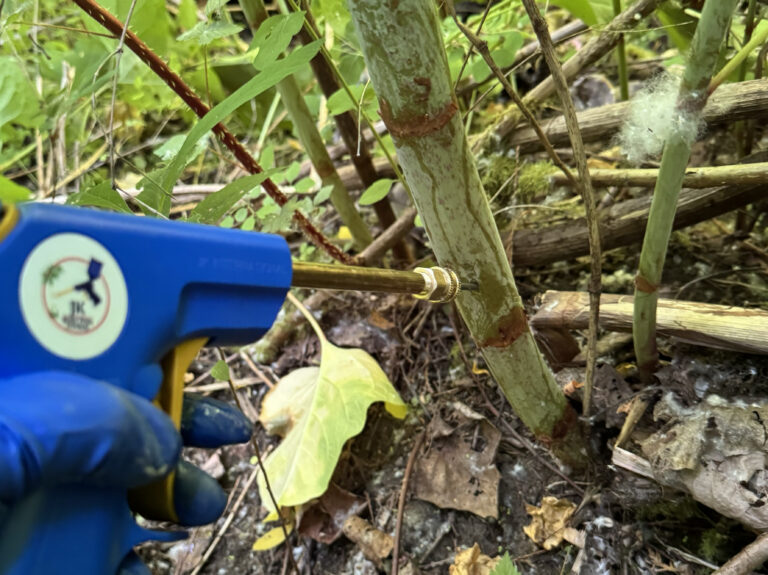
Pierce County Surface Water engaged Riparia to address a thick grove of Japanese knotweed established along Kapowsin Creek. Riparia used injectable herbicide to eliminate that risk entirely, applying treatment directly into knotweed stems to target the root system without exposure to surrounding soil or waterways. Over the course of the treatment season, Riparia reduced the infestation by 70%.
Comprehensive integrated pest management services for a full range of invasive species threatening Pacific Northwest landscapes, riparian corridors, and restoration sites.
Licensed management of regulated noxious weeds using mechanical, chemical, and cultural control methods tailored to the species, site, and regulatory requirements.

The longer Japanese knotweed goes untreated, the harder it becomes to control. Contact Riparia today for a free site assessment and let’s put together a treatment plan that gets it under control.
Request a Free Knotweed Assessment
Or call us directly: (360) 693-4555