Noxious Weed Control

Noxious weed control is the science-based removal and management of classified invasive plant species from private and public lands, using an integrated pest management (IPM) approach that delivers safe, effective, and lasting results.

Request a Noxious Weed Assessment

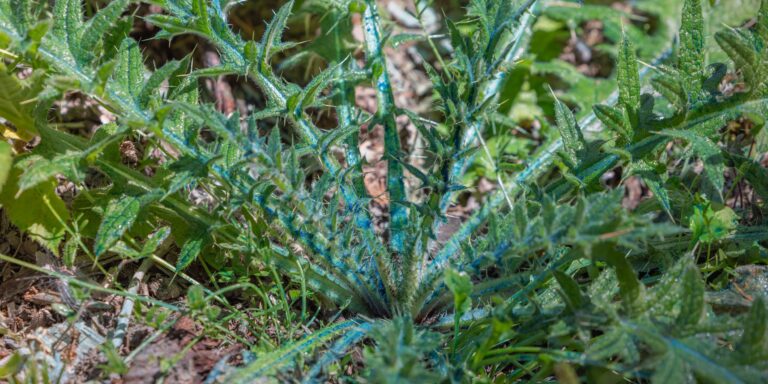
Low-growing spiky green thistle leaves and stems covered in fine hairs and morning dew, spread across ground.

Weed Control Services You Can Count On

Riparia’s crews are skilled plant identifiers who can differentiate noxious weeds from native lookalikes, accurately diagnose lesser-known problem species, and select the invasive weed control treatment method most effective for each specific situation. We take safety seriously—our staff are trained in knowing when conditions are appropriate for treatment and when they’re not, and all herbicide applications are performed by licensed operators only.

Shield-shaped emblem showing yellow invasive flowers by a winding path toward green hills; text below reads "INVASIVE SPECIES"

Who This Is For

  • Landowners who are tired of watching blackberry, thistle, or other invasive species encroach on their property and are ready to take action with a professional management plan.

  • Property owners who have received a noxious weed violation from their county or city for Class A or B listed species and need a licensed contractor to initiate management.

  • Ranchers and agricultural landowners who have identified a problem infestation—such as poison hemlock—on their property and need a certified contractor to begin control before it spreads or causes harm to livestock.

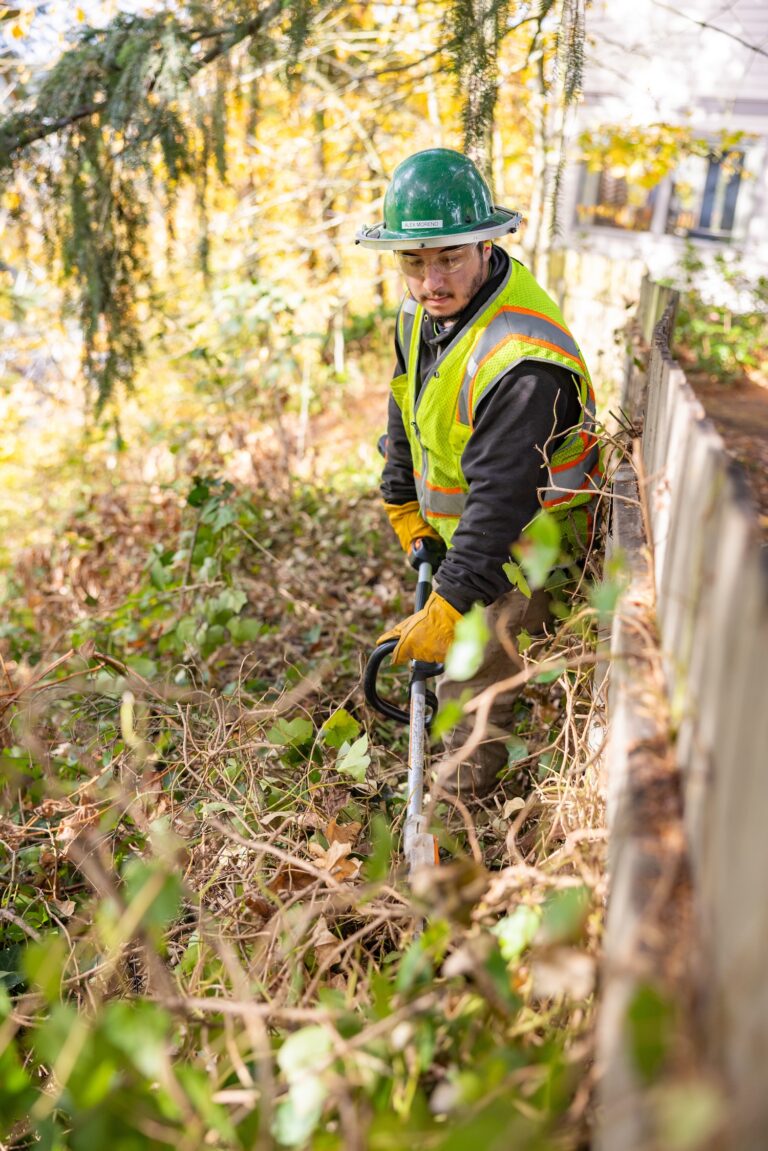
Worker in a green hard hat and high-visibility vest trimming overgrown brush along a wooden fence with a handheld trimmer

What To Expect

Riparia responds quickly, works efficiently, and backs every decision with plant science and adaptive management experience. Clients can expect:

  • Direct action: Our office staff responds to inquiries promptly and can generally have a crew on site for noxious weed work within the week.
  • Decision Making Based on Science: Our crews are trained in plant identification and IPM practices. We select the right control method for the right weed at the right time of year.
  • Free Estimates: Riparia provides a free on-site assessment and estimate before any work begins so you know exactly what to expect.
  • Control Tailored to Your Preferences: We work with you to select control methods—chemical, mechanical, biological, or cultural—that align with your site conditions, timeline, and management goals.
  • Follow-up Verification: We return after initial treatment to confirm effectiveness and retreat any weeds that were missed until the problem is fully resolved.
How We Work

  • 1. Identify the Problem

    Riparia coordinates with the county noxious weed board to determine what information or data has already been collected about your property — establishing a clear picture of the infestation, listed species present, and any existing compliance obligations before work begins.

  • 2. Immediate Action & IPM Plan

    We develop an integrated pest management plan (IPM) specific to your site and needs, and take action to stop noxious weed growth as quickly as possible. For clients with violation notices, we communicate the management plan directly to the noxious weed board on your behalf — handling the regulatory side so you don’t have to.

  • 3. Follow-Up Verification

    We return to your site several weeks after initial treatment to verify that management efforts were successful. Anything that was missed or that shows insufficient response is re-treated until the problem has been resolved to standard.

Why Noxious Weed Control Matters

Noxious weed regulations exist to prevent the harm these species cause to agriculture, natural ecosystems, and public safety. Left unmanaged, they spread across property lines, degrade habitat, and become exponentially harder and more expensive to control.

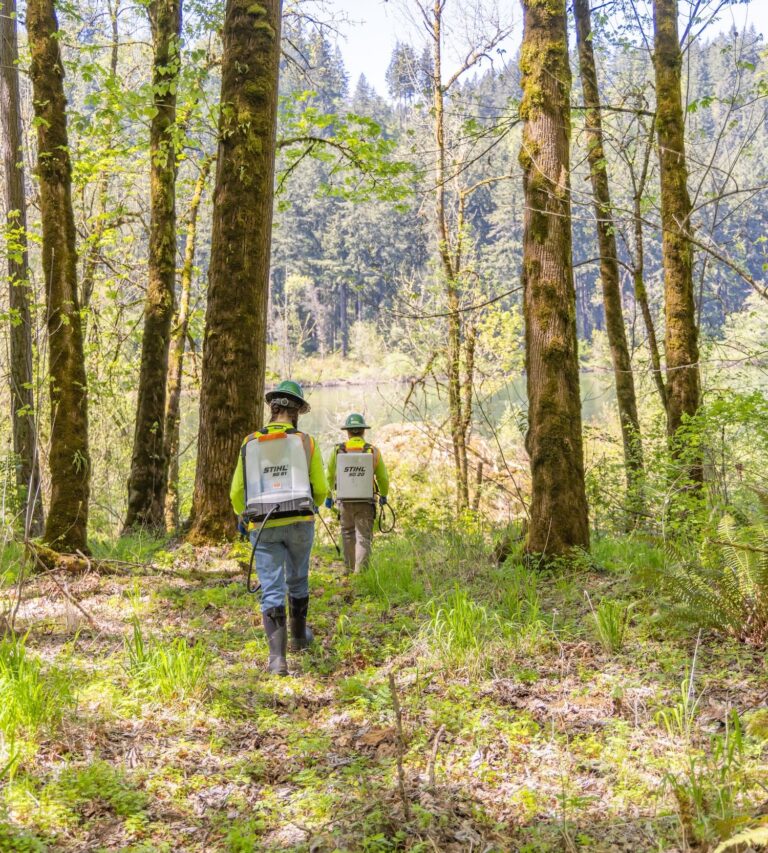
Two forest workers wearing bright safety vests and backpack sprayers walking on a leafy trail toward a river through tall trees

Biodiversity & Ecosystem Resilience

Invasive species establish themselves as large single-species populations—monocultures that displace the diverse, complex native plant communities that make ecosystems resilient. Biodiversity isn’t just ecologically valuable, it’s what allows a system to withstand disease, climate stress, and other pressures.

Public Safety & Property Hazards

Some noxious weeds pose direct threats to human and animal safety. Poison hemlock is toxic to people and livestock. Giant hogweed causes severe skin burns from sap contact. English ivy climbing mature trees adds weight and wind-catching foliage that dramatically increases the risk of limb and tree failure.

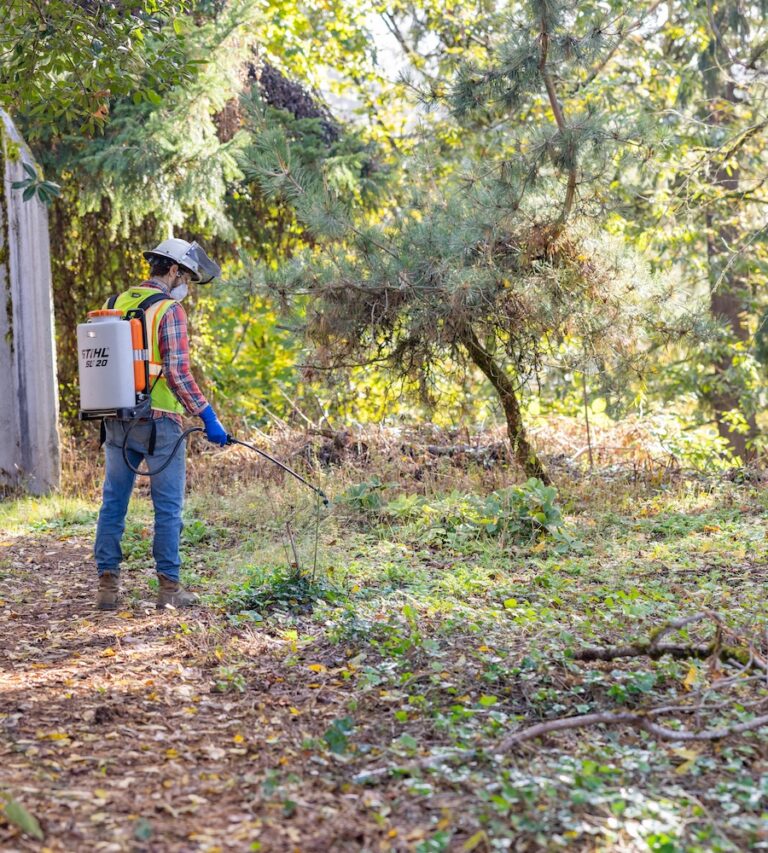
Worker in safety gear and backpack sprayer treating weeds in a sunlit woodland clearing near trees and undergrowth

Native Wildlife Habitat

Native plant communities support the insects, birds, amphibians, and mammals that depend on them in ways that invasive monocultures simply cannot replicate. Noxious weed control can serve as critical habitat restoration for the wildlife that belongs here.

Erosion Control & Soil Stability

Noxious weeds colonize hillsides and stream banks, but they are poor at anchoring soil compared to the native species they displace. Once invasives establish on a slope or riparian area, they increase erosion risk, sediment delivery to waterways, and terrain instability.

Signature Project

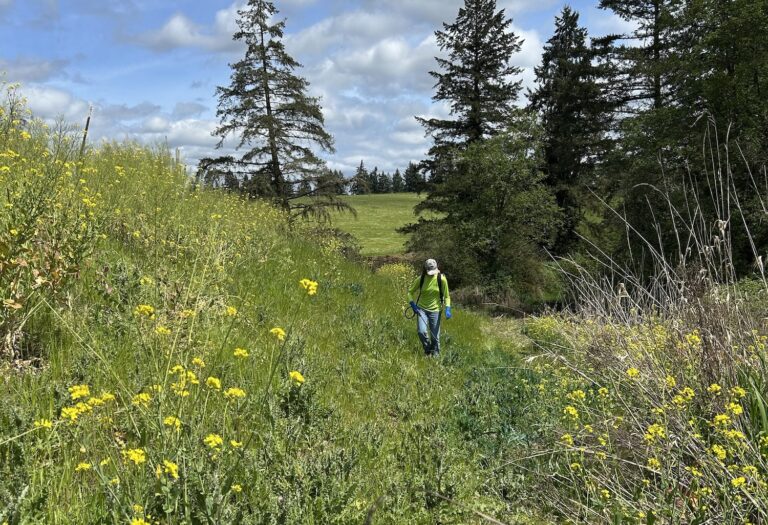
Person in a green shirt and cap walking through a grassy meadow with yellow wildflowers, flanked by tall pine trees under a blue sky with clouds

Sanderling Park — Pahlisch Homes

At the Sanderling Park development site, Riparia manages noxious weeds across 15 acres of active development land surrounded by neighboring properties with heavy invasive presence. Using a combination of backpack sprayers, boom sprayers, deck mowers, and brush cutters— all applied according to IPM best practices—Riparia maintains the open space areas in a condition that prevents invasive encroachment from surrounding properties from establishing a foothold on the site.

Frequently Asked Questions

Related Services

  • Japanese Knotweed Removal

    Specialized removal of one of the Pacific Northwest’s most aggressive and difficult-to-control invasive plants, using injectable herbicide and integrated management practices.

    Read more

  • Invasive Species Management

    Comprehensive invasive species control across a full range of plant types and site conditions—including blackberry and other problem species.

    Read more

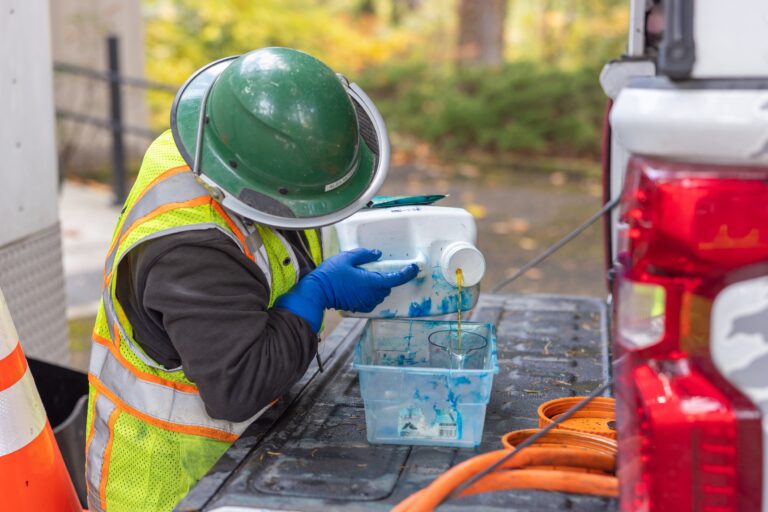
Worker in green hard hat and reflective vest pouring yellow liquid from a white jug into a clear container on a truck bed

Ready To Get Started?

Whether you have a violation notice or just a problem that’s been growing for a little too long, Riparia is ready to help. Contact us today for a free on-site assessment and we’ll develop a plan that’s responsive to your needs.

Request a Blackberry Control Assessment

Or call us directly: (360) 693-4555