Green Infrastructure Maintenance

Riparia provides exhaustive green infrastructure maintenance services with crews and management experienced specifically in vegetated stormwater facility care, bringing over 30 years of combined experience to every site.

Schedule a Green Infrastructure Maintenance Visit

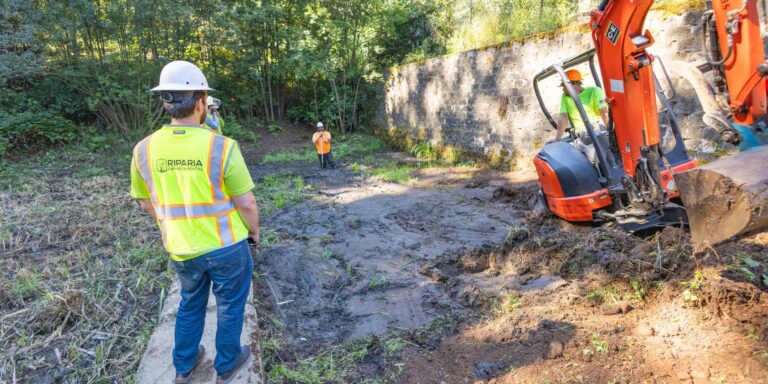
Workers in safety vests and hard hats stand beside a muddy excavation while an orange Kubota mini excavator operates near a stone wall

Designed for Function, 
Season After Season

Green stormwater infrastructure—bioretention cells, bioswales, rain gardens, detention ponds, constructed wetlands, stormwater planters, and filtration systems like Filterra and Biopods—requires specialized, knowledgeable maintenance to continue functioning as designed. This work demands a unique attention to detail that goes well beyond standard landscaping. If you’re responsible for a vegetated stormwater facility,  Riparia has the expertise to keep it compliant, functional, and looking its best.

Shield-shaped emblem showing a rainy landscape with river, pine trees, mountains and orange sunset, labeled "Stormwater Management"

Who This Is For

  • HOA board members and presidents who need a qualified maintenance contractor for a vegetated stormwater facility on their community’s property and want the confidence that it’s being maintained to regulatory standards.

  • HOA association managers at property management companies responsible for maintaining vegetated stormwater facilities across a portfolio of HOA clients and looking for a single, reliable contractor who understands the compliance requirements involved.

  • Commercial, multifamily, and industrial property managers who oversee stormwater facilities at their properties and need a contractor with the technical knowledge to maintain them properly and document that maintenance for regulators.

What To Expect

When Riparia maintains your green stormwater infrastructure, you gain the benefit of an experienced crew with specialized expertise in a wide range of essential services. Every visit is informed by a thorough understanding of your specific facility—its design, its function, its regulatory obligations, and its maintenance history.
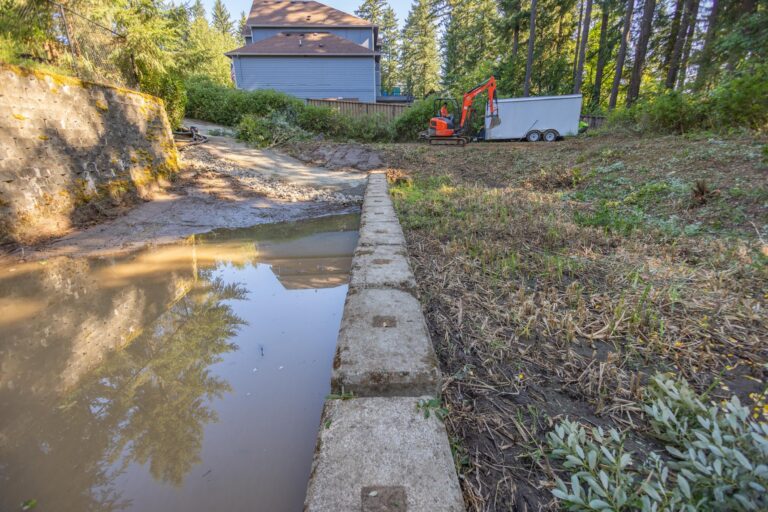
Narrow concrete retaining wall beside a muddy pond with excavator, trailer, cleared vegetation and a blue house in background
  • Vegetation management and native plant care
  • Invasive and noxious weed control
  • Inlet and outlet clearing
  • Trash and debris removal
  • Sediment removal and erosion control
  • Clearing of fence lines and access roads
  • Revegetation and stabilization as needed
  • Pond and detention pond inspection, maintenance, and repair
  • Inspection of structures and facility components
  • Routine maintenance log documenting all completed tasks
  • Annual inspection report summarizing facility condition and compliance status

For customers enrolled in an ongoing noxious weed control program, Riparia also develops an Integrated Pest Management (IPM) plan tailored to your facility’s specific vegetation challenges. All maintenance activities are documented and submitted to you or the applicable regulatory agency as required by your operations and maintenance plan.

How We Work

  • 1. Pre-Visit Preparation

    Before mobilizing to your site, our crew reviews the facility’s plan sets, O&M agreement, and any site-specific notes from prior visits. We believe in knowing before we go—every crew member arrives understanding the facility’s layout, function, and the maintenance priorities for that visit.

  • 2. Site Mobilization & Safety Assessment

    Upon arrival, the crew assesses the work zone and completes a Job Safety Analysis (JSA) to identify any site-specific hazards before work begins. Safety is built into every step of our process, not treated as an afterthought.

  • 3. Maintenance Activities

    The crew performs all required maintenance tasks for the visit—vegetation management, weed control, inlet and outlet clearing, debris removal, sediment removal, erosion control, and any additional scope items identified during the site assessment.

  • 4. Maintenance Log Completion

    At the conclusion of each visit, the crew completes a detailed maintenance log documenting every task performed, observations about facility condition, and any items requiring follow-up attention.

  • 5. Reporting & Submittal

    Maintenance logs are submitted to the customer and, where required by permit or O&M agreement, to the applicable regulatory agency. Our documentation gives you a clear, defensible record of your facility’s maintenance history.

Why Green Infrastructure
Maintenance Matters

Vegetated stormwater facilities are living systems. Unlike gray infrastructure, which degrades primarily through physical wear, green infrastructure can fail in multiple directions—from overgrowth and invasive encroachment to vegetation loss, erosion, and sediment accumulation. Many jurisdictions require property owners to maintain vegetated stormwater facilities in accordance with an approved operations and maintenance plan as a condition of their stormwater permit. Regular, knowledgeable maintenance is what keeps these systems functional, compliant, and balanced.

Two workers in high-visibility shirts, hard hats, face shields, and gloves using brush cutters to clear tall grass in a green, wooded wetland.

Aesthetic Appearance

Well-maintained vegetated facilities enhance the surrounding property and community. Neglected areas become eyesores that reflect poorly on ownership and diminish property value.

Effective Pollutant & Sediment Removal

Healthy vegetation and adequate capacity are what make these facilities work. Without regular maintenance, both degrade along with the facility’s ability to treat stormwater.

Invasive & Noxious Weed Control

Without regular vegetation management, invasive species crowd out the native plants these facilities depend on. Once established, they are far more costly to remove than to manage proactively.

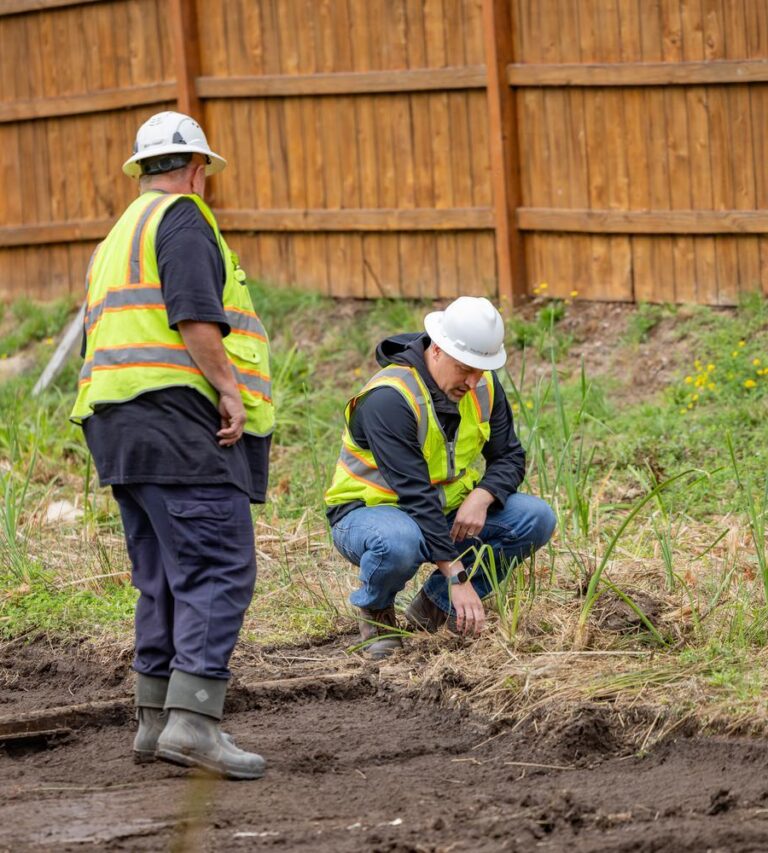
Two construction workers in hard hats and high-visibility vests inspecting soil and plants near a wooden fence.

Preserving Storage Capacity

Sediment accumulates over time and progressively reduces a facility’s ability to hold and treat stormwater. Periodic removal is far less expensive than the rehabilitation that deferred maintenance eventually requires.

Preventing Flooding

Clogged inlets and outlets, reduced capacity, and debris buildup can cause stormwater to back up and flood surrounding areas—damaging adjacent properties, roads, and infrastructure.

Signature Projects

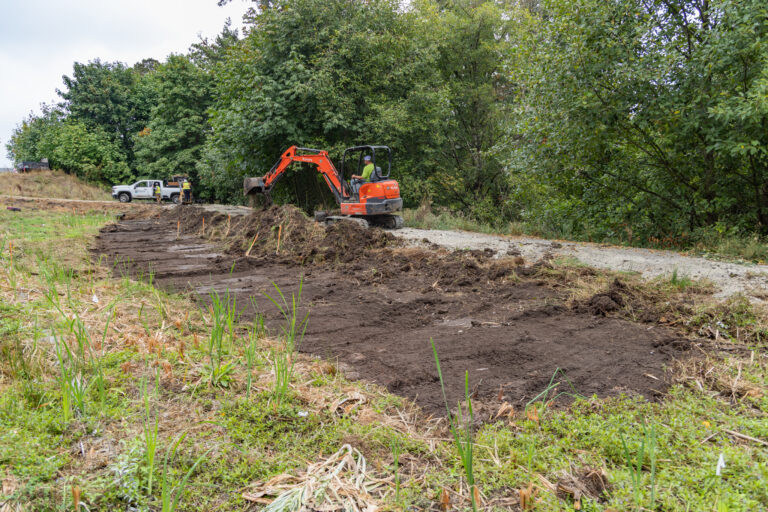
Orange mini excavator digging a narrow dirt path at edge of a wooded area while workers and trucks stand nearby

HARL 1-3 Swale 140 Rehabilitation — HOA, Southwest Washington

Riparia partnered with a private homeowners association to restore a stormwater treatment facility consisting of detention infrastructure and a large vegetated flow-through swale with an augmented underdrain system. The facility had experienced reduced performance due to sediment accumulation, damaged infrastructure components, and drainage issues identified during City inspections.

Following unsuccessful repair efforts by another contractor, the HOA engaged Riparia to evaluate existing conditions and develop a comprehensive rehabilitation approach to restore functionality, improve long-term performance, and return the facility to compliance.

Read the Full Case Study

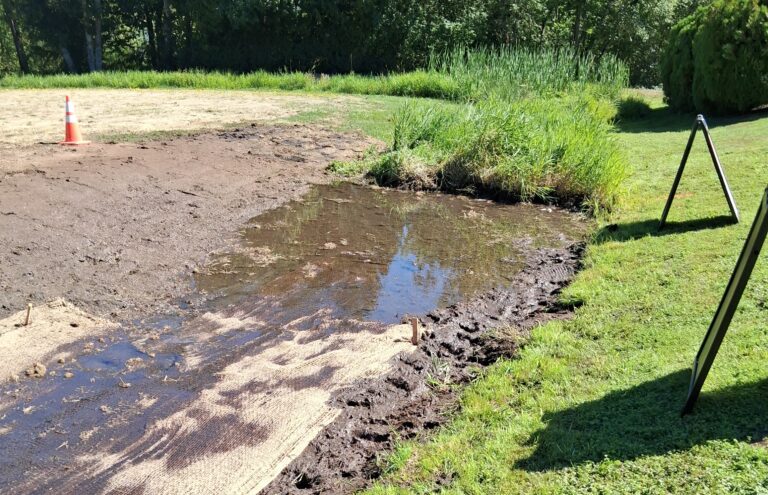
Muddy drained pond edge with standing puddle, erosion control matting, tall grass and an orange traffic cone in grassy park area

Lacamas Shores — Swale Regrading & Pond Sediment Removal, HOA

A vegetated swale had fallen out of compliance and an adjacent detention pond had lost significant treatment capacity due to sediment buildup. Riparia removed bulk sediment from the pond, regraded the swale, hydroseeded the banks to restore native vegetation, and exposed buried riprap energy dissipators that had been lost under accumulated material. Delivered on time and on budget.

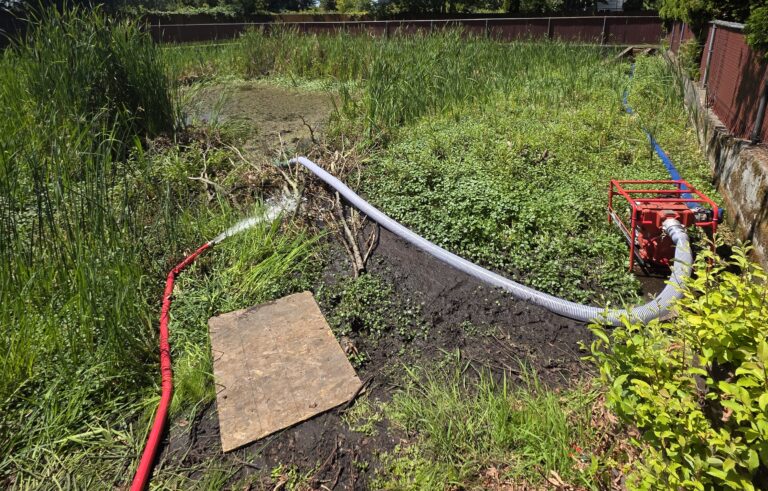
Overgrown backyard pond with reeds and duckweed being pumped dry by a red portable water pump and corrugated hoses on muddy ground

Moorcroft — Pond Rehabilitation, HOA

A detention pond had fallen out of compliance due to sediment accumulation, overgrown vegetation, and a failing gravel access road. The client was also experiencing localized roadside ponding and flooding during moderate rain events. Riparia removed accumulated sediment to restore treatment capacity, rebuilt the gravel access road, and jetted the incoming stormwater line to restore flow. Completed on time and on budget, with flooding issues resolved.

Frequently Asked Questions

Related Services

  • Swale Regrading

    Restoring vegetated swales to their design grade and cross-section when sediment accumulation or erosion has compromised their function.

    Read more

  • Pond Sediment Removal & Dredging

    Removing accumulated sediment from detention and retention ponds to restore design capacity and stormwater treatment performance.

    Read more

  • Facility Retrofits & Rehabilitation

    Comprehensive rehabilitation of green stormwater infrastructure that has deteriorated beyond the scope of routine maintenance, returning facilities to full compliance and function.

    Read more

Worker in high-visibility vest and face shield using a brush cutter to trim tall grass along a fenced roadside embankment

Ready To Get Started?

Your vegetated stormwater facility is a regulatory obligation and a long-term asset. Keeping it maintained properly protects both. Contact Riparia today to schedule a site visit and let’s build a maintenance program that works for your green infrastructure.

Schedule a Maintenance Visit

Or call us directly: (360) 693-4555